
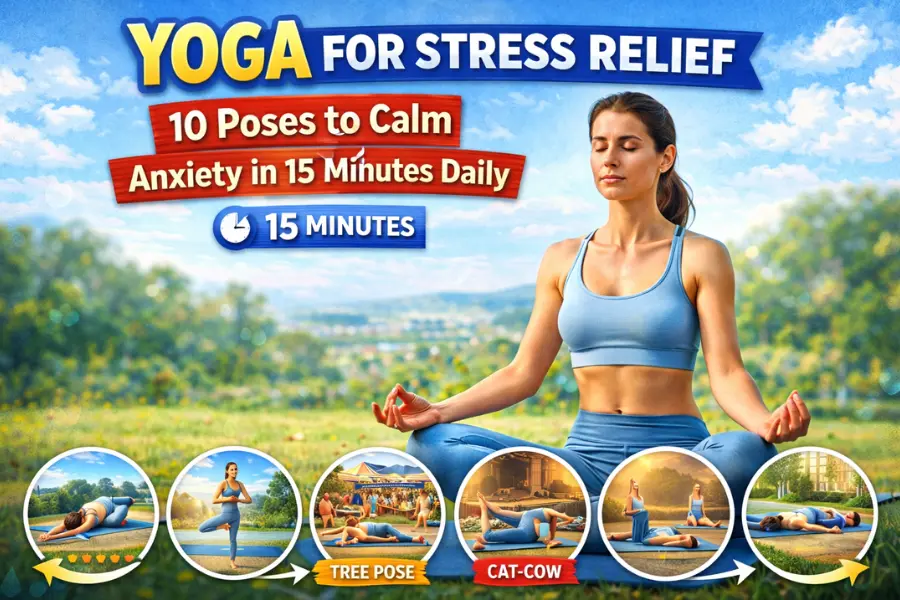
Yoga for Stress Relief: A Gentle Daily Practice to Calm Your Mind and Body
Modern life keeps our nervous system constantly switched “on.” Tight hips from sitting, stiff necks from screens, and shallow breathing from stress slowly drain our energy. This is where Yoga for Stress Relief becomes more than exercise — it becomes daily self-care.
This beginner-friendly yoga routine focuses on gentle stretches, mindful breathing, and slow transitions that activate the parasympathetic nervous system. Practiced for just 15 minutes a day, it helps reduce cortisol levels, release physical tension, and create a sense of inner calm that lasts beyond the mat.
Whether you feel mentally overloaded, physically tight, or emotionally exhausted, this guide will help you reset — naturally and safely.
Why Yoga for Stress Relief Actually Works
Stress isn’t just in the mind; it lives in the body. Yoga addresses both.
When you practice Yoga for Stress Relief, your body shifts from “fight or flight” into “rest and digest.” Slow movements combined with deep breathing send calming signals through the vagus nerve, lowering heart rate and muscle tension.
Science-Backed Benefits
- Relaxes tight hips, spine, and shoulders where stress accumulates
- Improves oxygen flow to the brain
- Reduces anxiety and mental restlessness
- Enhances sleep quality and emotional balance
- Helps regulate hormones linked to chronic stress
Amazing Fact: Gentle yoga postures paired with extended exhales can activate relaxation responses faster than complete rest alone.
Read also: Calf Workouts for Beginners: Sculpt Slimmer, Stronger Legs in 2 Weeks
15-Minute Yoga for Stress Relief: How to Practice
This short sequence is designed for beginners and busy schedules.
How to practice:
- Hold each pose for 30–60 seconds or 5–10 slow breaths
- Move slowly and mindfully
- Practice on an empty stomach or after light meals
- Morning or evening both work well
- Use a mat; blocks or cushions are optional
Focus on smooth breathing rather than perfect alignment.
The 10 Best Poses for Yoga for Stress Relief
1. Child’s Pose (Balasana)
A deeply grounding posture that releases the lower back and hips.
Why it helps:
Encourages mental surrender and calms racing thoughts.
2. Cat–Cow Pose (Marjaryasana–Bitilasana)
A gentle spinal wave that synchronizes movement and breath.
Why it helps:
Releases neck stiffness, massages the spine, and improves breath awareness.
3. Standing Forward Bend (Uttanasana)
A soothing inversion where the head hangs freely.
Why it helps:
Reduces mental chatter and gently decompresses the spine.
4. Tree Pose (Vrksasana)
A balance pose that anchors attention in the present moment.
Why it helps:
Builds focus and emotional steadiness during anxious moments.
5. Triangle Pose (Trikonasana)
A side stretch that opens hips and lengthens the spine.
Why it helps:
Releases stored tension in the lower back and hamstrings.
6. Bridge Pose (Setu Bandhasana)
A gentle backbend that opens the chest and lungs.
Why it helps:
Counters slouched posture and improves breathing capacity.
7. Seated Forward Bend (Paschimottanasana)
A calming fold that invites stillness.
Why it helps:
Soothes fatigue and helps quiet the nervous system.
8. Head-to-Knee Pose (Janu Sirsasana)
A one-sided forward fold promoting introspection.
Why it helps:
Eases headaches, reduces emotional tension, and supports digestion.
9. Legs-Up-the-Wall (Viparita Karani)
A restorative pose with legs supported vertically.
Why it helps:
Instant relaxation for tired legs, stressed minds, and poor circulation.
Amazing Fact: This pose can reduce heart rate within minutes when practiced mindfully.
10. Corpse Pose (Savasana)
The final integration pose.
Why it helps:
Allows the nervous system to fully absorb the benefits of the practice.
Stay here for at least 2–3 minutes, breathing naturally.
How to Maximize Yoga for Stress Relief Results
Breathing Technique
- Inhale for 4 seconds
- Exhale for 6 seconds
Longer exhales activate calm responses faster.
Simple Modifications
- Use cushions under knees or hips
- Bend knees slightly in forward folds
- Skip any pose that causes pain
Daily Habit Tip
Consistency matters more than intensity. Even 10 minutes daily can rewire stress responses over time.
Signs Yoga for Stress Relief Is Working
- Improved sleep quality
- Reduced neck and shoulder tightness
- Calmer reactions to daily stress
- Better posture and breathing
- Enhanced emotional clarity
Track how you feel before and after each session to notice progress.
FAQs
Yes. All poses are gentle, low-impact, and easy to modify.
Slow yoga with controlled breathing has been shown to lower cortisol levels and promote relaxation.
Daily practice brings the best results, but even 3–4 times a week helps.
Absolutely. Evening practice improves sleep quality and relaxation.


One thought on “Yoga for Stress Relief: 10 Poses to Calm Anxiety in 15 Minutes Daily”