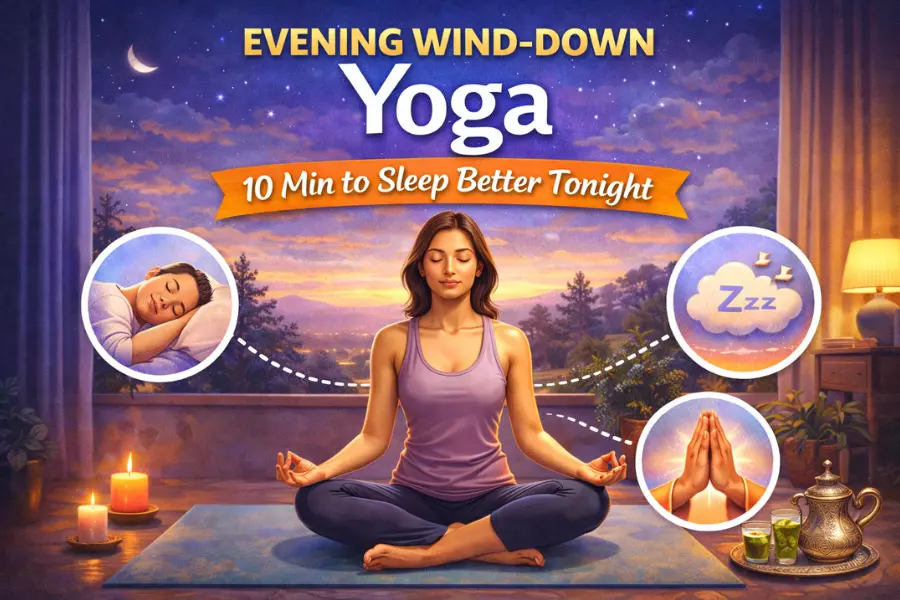
Evening Wind-Down Yoga: A 10-Minute Night Routine for Deep Sleep, Calm Mind, and Total Relaxation
In today’s fast-paced world, falling asleep peacefully can feel like a luxury. Endless screen time, work stress, and mental overload keep the nervous system in overdrive—even when your body is exhausted. This is where Evening Wind-Down Yoga becomes a powerful solution.
This gentle 10-minute routine is designed to release physical tension, calm racing thoughts, and prepare your body for deep, restorative sleep. The best part? It requires no equipment, no advanced flexibility, and no prior yoga experience. Just a quiet space, comfortable clothing, and a willingness to slow down.
Practicing this short nightly ritual can transform your sleep quality, reduce anxiety, and help your body naturally enter relaxation mode.
Why Evening Wind-Down Yoga Is So Effective for Sleep
Your body has two main nervous system modes: “fight-or-flight” and “rest-and-digest.” Most people stay stuck in the alert mode due to stress, notifications, and constant stimulation. Evening Wind-Down Yoga gently shifts your body into relaxation mode.
Here’s how it works:
Activates relaxation hormones: Gentle stretching and deep breathing lower cortisol and heart rate, helping your body prepare for rest.
Releases hidden physical tension: Stress accumulates in hips, shoulders, neck, and back. Gentle yoga releases this stored tension.
Slows brain activity naturally: Slow movements and breathing calm overthinking and quiet mental noise.
Improves sleep quality: Consistent practice trains your brain to associate yoga with bedtime, making it easier to fall asleep faster.
Balances your nervous system: Even a 10-minute session can significantly reduce stress and improve emotional stability.
Amazing fact: Studies show gentle yoga before bed can reduce insomnia symptoms and improve sleep duration without medication.
The Science Behind Evening Wind-Down Yoga and Nervous System Relaxation
Your breath directly influences your nervous system. Slow, deep breathing signals safety to your brain. This triggers the parasympathetic nervous system, which controls rest, healing, and recovery.
When you combine gentle movement with slow breathing:
- Muscles release tension
- Blood pressure lowers
- Brain activity slows
- Melatonin production improves
This creates the perfect internal environment for deep sleep.
Amazing fact: Slow breathing at night can reduce heart rate in just minutes, helping you fall asleep faster.
Read also: Yoga for Hair Loss
10-Minute Evening Wind-Down Yoga Routine for Total Relaxation
Move slowly and gently. Never force your body. Focus on breathing through your nose and relaxing deeper with every exhale.
1. Seated Neck and Shoulder Release (1 Minute)
Sit comfortably with your spine tall. Slowly lift your shoulders toward your ears as you inhale, then drop them as you exhale. Gently tilt your head side-to-side.
Benefits:
- Releases neck tension
- Relieves screen fatigue
- Reduces headaches
Amazing fact: Neck tension is one of the biggest hidden causes of poor sleep.
2. Seated Forward Fold (1.5 Minutes)
Sit cross-legged and slowly fold forward. Let your head relax completely.
Benefits:
- Calms the nervous system
- Relieves lower back tightness
- Encourages emotional release
This posture signals your brain that it’s safe to relax.
3. Cat-Cow Pose (1.5 Minutes)
Come onto hands and knees. Inhale and arch your back, then exhale and round your spine slowly.
Benefits:
- Relieves spinal pressure
- Improves circulation
- Synchronizes breath and movement
Amazing fact: Spinal movement improves nervous system communication and reduces stress signals.
4. Thread the Needle Pose (2 Minutes Total)
Slide one arm under your chest and rest your shoulder on the floor. Switch sides slowly.
Benefits:
- Releases shoulder tension
- Improves posture
- Relieves upper back stiffness
This pose is especially helpful for people who sit long hours.
5. Supported Bridge Pose (1.5 Minutes)
Lie on your back, lift your hips gently, and support them with a pillow.
Benefits:
- Opens chest and lungs
- Improves breathing capacity
- Reduces anxiety
Amazing fact: Opening the chest improves oxygen flow, calming the brain naturally.
6. Supine Twist (2 Minutes Total)
Hug one knee and gently twist your body. Switch sides.
Benefits:
- Relieves spinal tension
- Improves digestion
- Releases deep muscular stress
Twists act like a natural massage for your nervous system.
7. Reclined Butterfly Pose (2 Minutes)
Lie back with feet together and knees open.
Benefits:
- Releases hip tension
- Encourages deep breathing
- Reduces emotional stress
Amazing fact: Hips store emotional stress. Opening them helps release anxiety.
8. Legs-Up-the-Wall Pose (2 Minutes)
Lie down and rest your legs vertically against a wall.
Benefits:
- Improves circulation
- Reduces leg fatigue
- Calms the brain instantly
This is one of the most powerful relaxation poses in yoga.
9. Final Savasana with Belly Breathing (1–2 Minutes)
Lie flat and focus on breathing slowly.
Inhale deeply.
Exhale slowly.
Let go of all tension.
This final step integrates relaxation into your nervous system.
How Evening Wind-Down Yoga Improves Your Overall Health
Even beyond sleep, this practice offers long-term benefits:
- Reduces anxiety and stress
- Improves flexibility
- Supports heart health
- Enhances emotional balance
- Boosts mental clarity
- Improves posture
Amazing fact: Just 10 minutes of gentle yoga can significantly lower stress hormone levels.
Best Tips to Maximize Results from Evening Wind-Down Yoga
Follow these tips to enhance your experience:
- Practice 30–60 minutes before sleep
- Turn off screens before starting
- Dim the lights
- Use slow breathing (4-second inhale, 6-second exhale)
- Practice consistently
- Keep your room cool and quiet
Consistency is the key. Your body learns faster than you think.
Why Evening Wind-Down Yoga Is Perfect for Beginners
This routine is ideal because:
- No equipment required
- No advanced poses
- No flexibility needed
- Safe for all ages
- Can be done at home
Anyone can do it.
Even busy people can benefit from just 10 minutes.
Amazing Facts About Yoga and Sleep
- Gentle yoga improves sleep quality naturally
- Slow breathing reduces anxiety quickly
- Stretching relaxes muscles and brain simultaneously
- Yoga improves melatonin production
- Just 10 minutes daily can transform sleep patterns
Your body responds immediately to relaxation signals.
Make Evening Wind-Down Yoga Your Daily Ritual
Think of this routine as a signal to your body: the day is over. It’s time to rest, heal, and recharge.
Over time, you’ll notice:
- Faster sleep onset
- Deeper sleep cycles
- Reduced stress
- Better mood
- Increased energy
Your nights become peaceful. Your mornings become energized.
This simple habit can completely transform your health and well-being.
FAQs
Just 10 minutes is enough to relax your body and improve sleep.
Yes. It is designed for beginners and requires no experience.
Practice 30–60 minutes before bedtime.