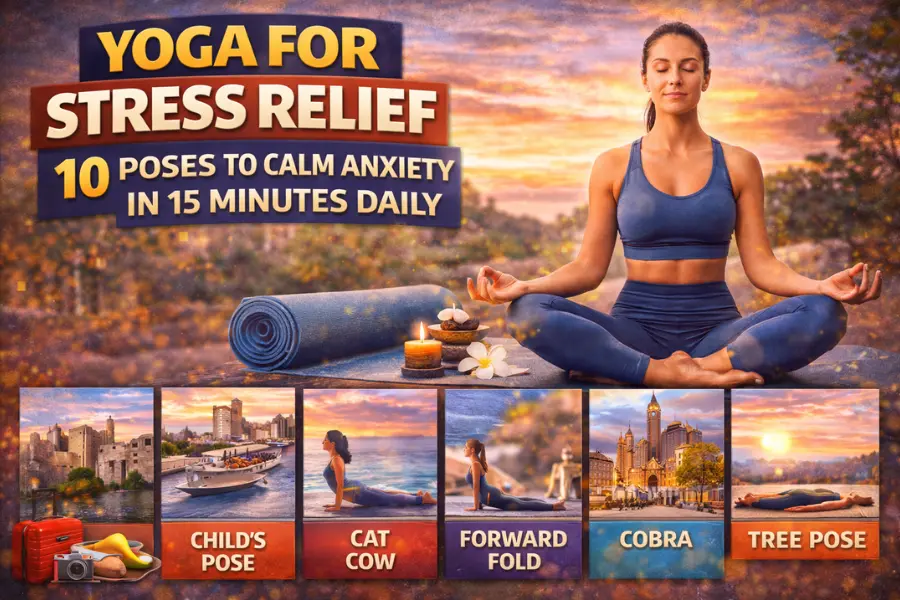
Yoga for Stress Relief: 10 Powerful Poses to Calm Your Mind and Reset Your Body Naturally
Modern life moves fast. Deadlines, notifications, and constant pressure can leave your nervous system stuck in “fight-or-flight” mode. The result? Anxiety, fatigue, poor sleep, and mental exhaustion. The good news is that Yoga for Stress Relief offers a simple, natural, and proven way to reset your mind and body in just minutes a day.
This beginner-friendly routine requires no equipment and works by activating your parasympathetic nervous system—the body’s “rest-and-digest” mode. With gentle poses, deep breathing, and mindful awareness, you can lower cortisol, slow your heart rate, and experience real calm.
Just 15 minutes daily can transform how you feel physically and emotionally.
Why Yoga for Stress Relief Works So Effectively
Yoga combines movement, breathing, and mindfulness. This powerful combination directly affects your brain and nervous system.
Here’s what happens when you practice yoga regularly:
- Lowers stress hormone levels naturally
- Slows heart rate and stabilizes blood pressure
- Improves oxygen flow to the brain
- Relaxes tight muscles caused by stress
- Improves sleep quality and emotional balance
Forward bends, gentle inversions, and restorative poses signal safety to your brain. This reduces anxiety and creates a deep sense of calm.
Amazing fact: Even slow breathing alone can lower your heart rate within minutes.
Read also: Jump Rope Workout for Beginners: Cardio + Toned Legs at Home
10 Best Yoga Poses for Stress Relief and Anxiety Reduction
These poses are safe for beginners and highly effective. Hold each for 8–12 slow breaths.
1. Child’s Pose (Balasana)
This deeply comforting pose relaxes your nervous system instantly.
How to do it:
- Kneel on the floor
- Sit back on your heels
- Fold forward and rest your forehead down
- Stretch arms forward or rest beside your body
Benefits:
- Relieves back and shoulder tension
- Creates a sense of emotional safety
- Calms racing thoughts
2. Cat-Cow Pose (Marjaryasana-Bitilasana)
This gentle flow releases spinal tension and synchronizes breath with movement.
How to do it:
- Start on hands and knees
- Inhale, arch your back and lift your head
- Exhale, round your spine and tuck chin
- Repeat slowly
Benefits:
- Releases stress stored in the spine
- Improves breathing rhythm
- Reduces mental tension
3. Seated Forward Bend (Easy Version)
Forward bends naturally calm the mind.
How to do it:
- Sit with legs extended
- Gently fold forward
- Rest hands on legs or feet
Benefits:
- Reduces anxiety
- Improves focus
- Stretches nervous system pathways
4. Legs-Up-The-Wall Pose (Viparita Karani)
One of the most powerful poses for instant relaxation.
How to do it:
- Lie down with legs resting vertically on a wall
- Relax arms beside your body
Benefits:
- Reduces cortisol levels
- Relaxes nervous system quickly
- Improves blood circulation
Amazing fact: This pose can slow brain activity associated with stress.
5. Supported Bridge Pose
This gentle backbend opens the chest and improves mood.
How to do it:
- Lie on your back
- Bend knees and lift hips
- Place pillow under hips for support
Benefits:
- Opens lungs for deeper breathing
- Reduces fatigue
- Improves emotional balance
6. Supine Twist
Twists release tension stored in the spine.
How to do it:
- Lie on your back
- Hug one knee and twist across your body
- Repeat on both sides
Benefits:
- Releases physical and emotional tension
- Improves digestion
- Relaxes muscles deeply
7. Reclined Butterfly Pose
This restorative pose opens hips and relaxes the nervous system.
How to do it:
- Lie down
- Bring soles of feet together
- Let knees fall open
Benefits:
- Encourages deep breathing
- Releases emotional tension
- Promotes deep relaxation
8. Corpse Pose (Savasana)
This is the most important pose for total relaxation.
How to do it:
- Lie flat on your back
- Relax your entire body
- Focus on slow breathing
Benefits:
- Lowers heart rate
- Integrates relaxation benefits
- Calms brain activity
Amazing fact: Just 5 minutes in this pose can reduce stress significantly.
9. Easy Pose Forward Fold
This gentle pose quiets mental activity.
How to do it:
- Sit cross-legged
- Fold forward slowly
Benefits:
- Grounds your mind
- Reduces mental overload
- Promotes calm awareness
10. Alternate Nostril Breathing
This breathing technique directly reduces anxiety.
How to do it:
- Inhale through one nostril
- Exhale through the other
- Alternate slowly
Benefits:
- Balances brain hemispheres
- Improves focus
- Reduces stress instantly
Yoga for Stress Relief: Simple 15-Minute Daily Routine
Follow this sequence daily:
- Child’s Pose – 2 minutes
- Cat-Cow – 1 minute
- Forward Bend – 2 minutes
- Legs-Up-Wall – 4 minutes
- Bridge Pose – 2 minutes
- Supine Twist – 2 minutes
- Reclined Butterfly – 2 minutes
- Savasana – 3 minutes
This routine resets your nervous system and improves emotional balance.
Consistency is more important than intensity.
Powerful Mental and Physical Benefits of Yoga for Stress Relief
Regular practice can help you:
- Reduce anxiety naturally
- Improve sleep quality
- Increase mental clarity
- Improve emotional stability
- Boost energy levels
- Strengthen mind-body connection
Amazing fact: Yoga can increase calming brain chemicals naturally.
Expert Tips to Maximize Stress Relief
Follow these simple tips:
- Practice in a quiet space
- Breathe slowly through your nose
- Keep lighting soft
- Focus on your breath
- Practice daily for best results
Even a short daily session can change your stress response permanently.
Why Yoga is Better Than Temporary Stress Solutions
Unlike temporary solutions, yoga addresses the root cause of stress.
It retrains your nervous system to stay calm naturally.
Instead of suppressing stress, yoga teaches your body how to release it.
This leads to long-term emotional resilience.
Amazing Facts About Yoga and Stress Relief
- Yoga activates the relaxation response naturally
- Deep breathing lowers heart rate quickly
- Forward bends calm brain activity
- Restorative yoga improves emotional balance
- Yoga improves sleep and reduces fatigue
Even beginners feel calmer after one session.
FAQs
Many people feel calmer after just one session.
Yes, this routine is designed for beginners.
Morning and evening are both effective.
Daily practice provides the best results.