20-Minute No-Equipment HIIT Workouts for Busy Schedules
Finding time to train is one of the biggest obstacles for most people. Between work, family and daily demands, a long gym session often feels impossible. That is where short, focused training shines.
20-minute no-equipment HIIT workouts deliver a high return on limited time. You need only your body weight, a small amount of floor space and the willingness to work hard in short bursts. These sessions raise your heart rate, challenge multiple muscle groups and can be done in a living room, hotel room or park.
This guide gives you ready-to-use routines, clear structure and practical advice so you can start today without equipment or excuses.
Outline
- Introduction
- Why 20-Minute HIIT Works
- How to Structure a No-Equipment HIIT Session
- Warm-Up (3–4 Minutes)
- Workout 1: Full-Body Power
- Workout 2: Lower-Body Focus
- Workout 3: Upper-Body & Core
- Workout 4: Cardio Conditioner
- Cool-Down and Recovery
- Weekly Scheduling Tips
- Form and Safety Notes
- FAQs
Why 20-Minute HIIT Works
High-Intensity Interval Training alternates short periods of hard effort with brief recovery. Research consistently shows that this format can improve cardiovascular fitness, support fat loss and build muscular endurance in less total time than steady-state exercise.
Key advantages for busy people:
- Minimal time commitment
- No gym or equipment required
- Easy to fit into lunch breaks or early mornings
- Scalable for beginners through advanced levels
- Keeps sessions mentally engaging
Consistency beats perfection. Four 20-minute sessions per week outperform one occasional long workout that never happens.
How to Structure a No-Equipment HIIT Session
A complete 20-minute session usually looks like this:
| Section | Duration | Purpose |
|---|---|---|
| Warm-up | 3–4 minutes | Raise heart rate, mobilise joints |
| Main work | 14–16 minutes | High-intensity intervals |
| Cool-down | 2–3 minutes | Lower heart rate, reduce stiffness |
Interval options that work well:
- 40 seconds work / 20 seconds rest
- 30 seconds work / 15 seconds rest
- 45 seconds work / 15 seconds rest
- AMRAP (as many rounds as possible) in a fixed time
Choose one format and stick with it for the whole main set so you can focus on effort rather than constantly checking the clock.
Warm-Up (3–4 Minutes)
Never skip this part. A short warm-up prepares joints and muscles and reduces injury risk.
Perform each move for 30–40 seconds:
- March or jog in place
- Arm circles (forward and backward)
- Bodyweight good mornings or hip hinges
- World’s greatest stretch or alternating lunges with reach
- Easy squats or squat-to-stand
By the end you should feel warmer and slightly out of breath, ready for higher intensity.
Workout 1: Full-Body Power
Format: 40 seconds work / 20 seconds rest Rounds: 4 rounds of the following 4 exercises (16 minutes total work + rest)
- Squat to Reach – Feet shoulder-width, lower into a squat, then drive up and reach arms overhead.
- Push-Up (on knees or toes) – Keep a straight line from head to heels or knees.
- Reverse Lunge (alternating) – Step back, lower until the back knee nearly touches the floor, then drive forward.
- Mountain Climbers – In a high plank, drive knees toward the chest at a controlled but quick pace.
Rest 1 minute after the fourth round if needed, then move to cool-down.
This session hits legs, chest, shoulders, core and cardiovascular system in one compact block.
Workout 2: Lower-Body Focus
Format: 30 seconds work / 15 seconds rest Complete 5 rounds
- Bodyweight Squat – Focus on depth and control.
- Alternating Reverse Lunge – Keep torso upright.
- Glute Bridge – Drive through heels, squeeze at the top.
- Sumo Squat Pulse – Wide stance, toes out, small pulses at the bottom.
- Fast Feet or High Knees – Stay light on your feet.
This routine builds lower-body strength and endurance while keeping the heart rate elevated. Ideal when you want to emphasise legs and glutes.
Read also: Cardio vs Weights for Beginners: What You Need to Know

Workout 3: Upper-Body & Core
Format: 45 seconds work / 15 seconds rest Complete 4 rounds
- Push-Up (elevate hands on a couch or wall to modify)
- Plank Shoulder Taps – In high plank, tap opposite shoulder while minimising hip rotation.
- Superman Hold or Swimmers – Lie face down, lift chest and legs, or alternate arm/leg lifts.
- Bicycle Crunches – Controlled rotation, low back pressed down.
- Triceps Dip (using a sturdy chair or couch) – Keep hips close to the support.
This session strengthens the pushing muscles, posterior chain and core without any equipment.
Workout 4: Cardio Conditioner
Format: 20 seconds max effort / 10 seconds rest (Tabata-style) Eight rounds of each pair, or mix as a continuous circuit
Option A – Continuous circuit (repeat for 12–16 minutes):
- Burpees (or step-back burpees)
- Jump Squats (or bodyweight squats)
- Plank Jacks (or mountain climbers)
- Skater Hops (or lateral steps)
Option B – Classic Tabata on two moves (4 minutes per pair):
- Pair 1: High knees + squat jumps
- Pair 2: Mountain climbers + burpees
This is the most demanding option. Use it when energy is high and you want maximum cardiovascular benefit in minimal time.
Cool-Down and Recovery
Spend 2–3 minutes bringing the heart rate down:
- Easy march in place
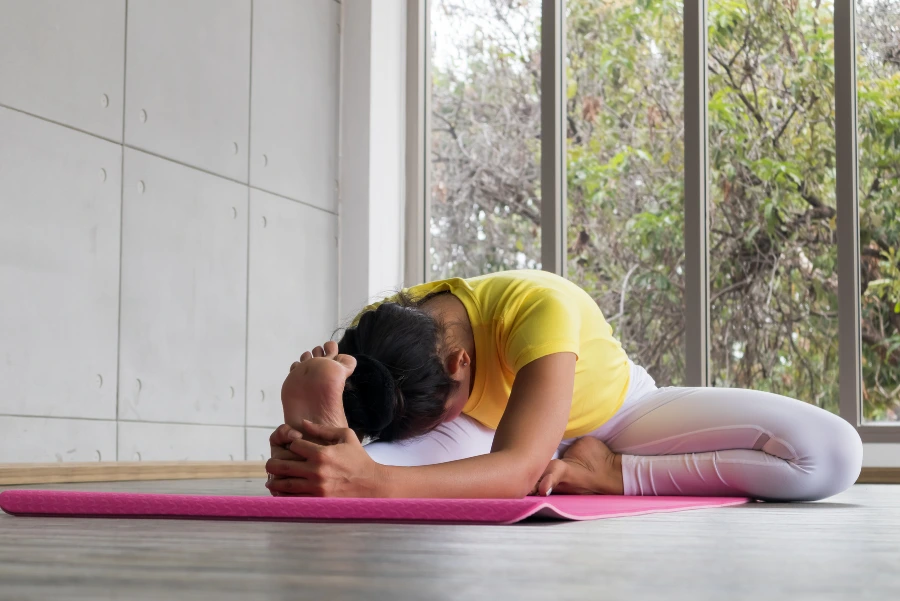
- Forward fold or hamstring stretch
- Quad stretch (standing or side-lying)
- Chest opener against a wall or doorway
- Deep diaphragmatic breaths
Optional: foam roll or add a longer mobility session later if you have time. Hydrate and, if the workout was intense, consider a simple protein-plus-carbohydrate snack within an hour or two.
Weekly Scheduling Tips
A practical weekly approach for busy schedules:
- Monday – Full-Body Power
- Tuesday – Rest or easy walk
- Wednesday – Lower-Body Focus
- Thursday – Rest or mobility
- Friday – Upper-Body & Core or Cardio Conditioner
- Saturday – Optional second full-body or outdoor activity
- Sunday – Full rest
Three to four HIIT sessions per week is plenty for most people. Pair them with daily walking and adequate sleep for better results than adding more high-intensity days.
Progress by:
- Improving exercise form
- Increasing work interval length slightly
- Reducing rest periods
- Adding an extra round when the current version feels manageable
Form and Safety Notes
- Quality of movement always comes before speed.
- Modify push-ups, lunges and burpees as needed — knee push-ups, step-back lunges and step-back burpees are effective.
- If you feel sharp pain (not normal muscle effort), stop the exercise.
- Beginners should start with the longer rest options and fewer rounds.
- Stay hydrated and avoid these sessions if you are ill or severely under-recovered.
- Consult a doctor before starting any new exercise programme if you have existing health conditions.
FAQs
Can 20-minute HIIT workouts really be effective? Yes. When intensity is high and form is solid, short sessions improve fitness, support body composition goals and build work capacity.
How often should I do no-equipment HIIT? Most people progress well with 3–4 sessions per week, allowing recovery between hard efforts.
Do I need any equipment at all? No. All exercises in these routines use body weight only. A yoga mat can add comfort but is optional.
What if I cannot do burpees or jump squats? Replace them with step-back burpees, regular squats or marching in place. The structure still works.
Is HIIT suitable for beginners? Yes, if you scale the intensity and volume. Start with shorter work periods, longer rests and simpler movements, then build up.
Can I do these workouts every day? Daily high-intensity work is usually counterproductive. Alternate with easier movement or rest days for better recovery and results.