A Complete Illustrated Guide to Gym Machine Names for Arms and Upper Body
Walking into a gym for the first time (or even the tenth) can feel overwhelming. Rows of machines look similar, nameplates are small, and it is easy to wonder which station actually trains the arms, chest, back or shoulders.
Knowing the correct gym machine names saves time, reduces embarrassment, and helps you build balanced upper-body strength. This guide focuses on the machines most useful for arms and the rest of the upper body. You will learn what each machine is called, which muscles it targets, and how it fits into an effective arm day or full upper-body session.
Outline
- Introduction
- Why Learn Gym Machine Names
- Chest Machines
- Back Machines
- Shoulder Machines
- Biceps Machines
- Triceps Machines
- Multi-Purpose Upper Body Machines
- Sample Arm Day Machine Workout
- Tips for Safer, Better Results
- FAQs
Why Learn Gym Machine Names
Clear names help you:
- Follow workout plans accurately
- Ask staff or trainers for help without confusion
- Track progress on the same equipment
- Avoid machines that do not match your goal
- Move efficiently during busy gym hours
Once you recognise the main stations, arm workout equipment becomes far less intimidating and much more useful.
Chest Machines
Chest Press Machine (Seated Chest Press)
You sit with your back against a pad and push handles forward. This machine primarily works the pectorals (chest), with help from the front shoulders and triceps. It is one of the most common starting points for upper-body training.
Incline Chest Press Machine
Similar to the flat chest press, but the seat and handles sit at an upward angle. It shifts more emphasis onto the upper chest and front delts.
Pec Deck / Butterfly Machine (Pectoral Fly Machine)
You sit and bring two padded arms together in front of your chest. This isolation movement targets the pectorals with less triceps involvement than a press.
Cable Crossover Station
Two high (or adjustable) cable pulleys let you perform fly movements from different angles. It is excellent for chest shaping and also useful for many arm and shoulder exercises.
Back Machines
Lat Pulldown Machine
You pull a bar down toward your chest from an overhead position. This is one of the best machines for building the latissimus dorsi (the wide back muscles) and also works the biceps and rear shoulders.
Seated Row Machine (Cable or Plate-Loaded)
You sit and pull handles toward your torso. It targets the mid-back, lats, rear delts and biceps. Many gyms have both a cable version and a plate-loaded version.
Assisted Pull-Up / Chin-Up Machine
A platform or knee pad provides counterweight so you can perform pull-ups or chin-ups with less than full body weight. Excellent for building toward unassisted upper-body pulling strength.
T-Bar Row Machine (or Landmine Row Station)
A landmine or dedicated T-bar setup lets you row a loaded bar. It builds thickness in the back and involves the arms heavily.
Read also: Jump Rope Workout for Beginners: Cardio + Toned Legs at Home
Shoulder Machines
Shoulder Press Machine (Overhead Press Machine)
You sit and press handles upward. This trains the deltoids (especially the front and side heads) along with the triceps.
Lateral Raise Machine
You lift padded arms out to the sides against resistance. It isolates the side delts and helps create wider-looking shoulders.
Rear Delt / Reverse Fly Machine
You face the pad and move the arms backward or outward. This targets the often-neglected rear deltoids and helps balance shoulder development.
Cable Lateral or Front Raise Setup
Using a low cable, you can perform lateral raises or front raises with constant tension. Very effective for shoulder detail work.
Biceps Machines
Preacher Curl Machine (Biceps Curl Machine)
Your upper arms rest on an angled pad while you curl a bar or handles. This isolates the biceps and reduces momentum, making it a staple of many arm day workouts.
Cable Biceps Curl Station
Using a low cable and a straight bar, EZ-bar or rope, you curl the weight upward. Cables keep tension on the biceps throughout the entire range of motion.
Arm Curl Machine (Selectorised Biceps Machine)
A seated machine with a pivoting arm that you curl toward your shoulders. It is simple to use and easy to adjust for progressive overload.
These pieces of arm workout equipment allow you to focus purely on elbow flexion without stabilising a free weight.
Triceps Machines
Triceps Pushdown Station (Cable Pushdown)
You push a bar or rope downward against cable resistance. This is one of the most popular and effective triceps exercises and appears in almost every arm day workout.
Overhead Triceps Extension Machine or Cable
You extend your arms overhead against resistance. This emphasises the long head of the triceps.
Triceps Dip Machine (Assisted or Weighted)
A machine version of dips that lets you add or reduce load. It trains the triceps hard while also involving the chest and shoulders.
Close-Grip Press or Triceps Press Machine
Some gyms have a dedicated press that uses a narrow grip to shift emphasis onto the triceps.
Strong triceps contribute significantly to overall arm size and to pressing strength.
Multi-Purpose Upper Body Machines
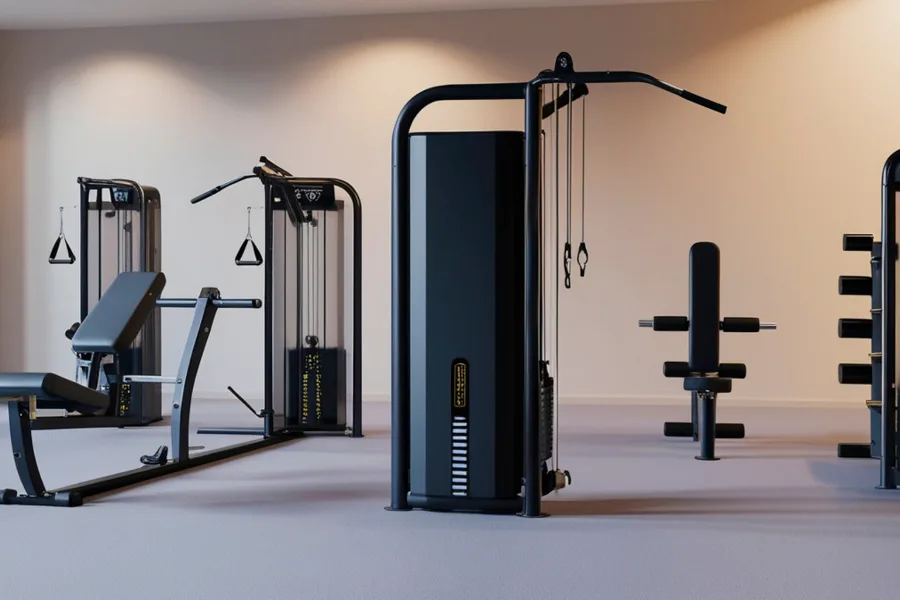
Functional Trainer / Dual Adjustable Cable Machine
Two independent weight stacks with adjustable pulleys. You can perform chest presses, rows, curls, pushdowns, face pulls and many more movements. It is one of the most versatile pieces of equipment in any gym.
Smith Machine
A barbell fixed within steel rails. You can use it for close-grip bench presses, overhead presses, inverted rows and other upper-body lifts with added stability.
Assisted Dip / Pull-Up Combo Machine
Many gyms combine assisted dips and assisted pull-ups in one station, giving you both pushing and pulling options for the arms and upper body.
Sample Arm Day Machine Workout
Here is a straightforward machine-based arm session you can follow:
- Lat Pulldown – 3 sets of 8–12 reps (back + biceps)
- Seated Row – 3 sets of 8–12 reps
- Shoulder Press Machine – 3 sets of 8–12 reps
- Lateral Raise Machine – 3 sets of 10–15 reps
- Preacher Curl Machine or Cable Curl – 3 sets of 10–15 reps
- Triceps Pushdown – 3 sets of 10–15 reps
- Overhead Triceps Extension (cable or machine) – 3 sets of 10–15 reps
Rest 60–90 seconds between sets. Focus on controlled movement and full range of motion. Adjust the order or volume according to your experience level and recovery.
This routine uses common arm workout machines and covers both biceps and triceps while including supporting upper-body work.
Tips for Safer, Better Results
- Adjust the seat and pads so the joints align correctly with the machine’s pivot points.
- Start with a light weight to learn the movement pattern.
- Use a full range of motion unless a trainer advises otherwise.
- Avoid jerky or swinging motions; control both the lifting and lowering phases.
- Breathe out during the effort (the pushing or curling phase).
- Progress gradually by increasing weight or reps over time.
- Balance pushing and pulling movements to protect the shoulders.
- If a machine causes joint pain, stop and choose an alternative.
Learning proper form on each piece of arm workout equipment pays off in both results and injury prevention.
FAQs
What gym machines are best for arms? Preacher curl machines, cable curl stations, triceps pushdown stations, overhead extension setups and dip machines rank among the most effective for direct arm work.
What is the difference between a pec deck and a chest press? The chest press is a compound pushing movement. The pec deck (fly machine) isolates the chest with less triceps involvement.
Can I build big arms using only machines? Yes. Machines allow progressive overload and isolation. Many people achieve excellent arm development with primarily machine-based training, especially when they train consistently and eat enough protein.
What machine works the biceps hardest? Preacher curl machines and cable curls both create strong biceps activation because they limit momentum and keep constant tension.
Is the lat pulldown good for arms? Yes. Although it targets the back, the biceps act as important synergists. Many lifters feel significant arm involvement on pulldowns and rows.
How often should I do an arm day workout? Most people progress well with direct arm work 1–2 times per week, either on a dedicated arm day or paired with other upper-body sessions.